

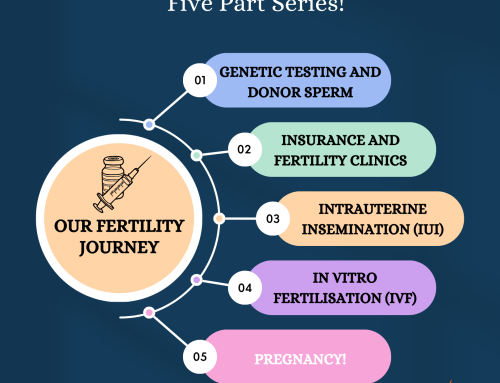
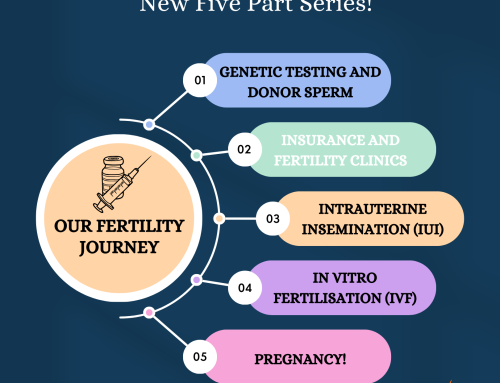
Everyone’s fertility journey looks different. That’s part of the reason why it’s so difficult to pin down the process and costs. So, I’m adding my voice to the choir here to express the experience my wife and I have been going through these past few years. Check out Parts 1-3 on Donor Sperm, Insurance, and Fertility Clinics and Intrauterine Insemination (IUI), respectively.
Part 4 of this series focuses on our fertility journey experience with in vitro fertilization (IVF). I’ll take you through what it is, how it works and what going through IVF ended up costing us. One thing that’s important to note for the IVF stage of this journey is that the medications for this procedure will be different for everyone. The medication regimine is tailored to each individual’s body and cycle, as well as how they’re responding to each round of medications. So, don’t expect your experience to mimic mine exactly. The general phases of the process should be similar though
What is IVF?
In vitro fertilization (IVF) is a series of procedures to stimulate pregnancy. The difference between IVF and IUI, as discussed in Part 3 of this series is in where fertilization takes place. In IUI, fertilization takes place within the uterus as the sperm is inserted into the uterus with a catheter. During IVF, fertilization takes place outside the body, in a lab where the sperm and egg are comnined to created embryos, or fertilized eggs. These eggs are then transferred back into the carrier, where it will hopefully implant and result in a pregnancy.
IVF has a higher rate of success than IUI as it can help pregnancy occur for any additional number of reasons that would make IUI unsuccessful such as:
- Fallopian tube damage or blockage
- Ovulation disorders
- Endometriosis
- Uterine fibroids (tumors)
- Previous surgery to prevent pregnancy, such as tubal ligation or having your tubes tied
- Issues with sperm count or motility that could prevent it from reaching the egg for fertilization
- Genetic disorders
- Egg retrieval for use in later IVF to preserve fertility due to health concerns, such as cancer or age
The steps that a patient must take for this are generally as follows:
- Ovarian Stimulation
- Egg retrieval
- Fertilization
- Embryo transfer
- Cryopreservation (embryo freezing)
Ovarian Stimulation
Basically, this phase is where you start all of your medications before egg retrieval. In a normal cycle, one follicle, containing an immature egg grows and is selected for maturation. During an IVF stimulated cycle, medications are provided that stimulate multiple follicles to encourage a multitude of eggs to mature for potential fertilization.
In the stimulation phase, a hormone called, unsurprisingly, follicle stimulating hormone (FSH) is produced. While this hormone is produced naturally, an additional amount of this hormone (determined by your OBGYN) will be given for growing multiple follicles. This gives you a better chance of producing more eggs by having more follicles that reach a certain size. Within each follicle is an immature egg cell.
Egg Retrieval
Egg Retrieval is a fairly short procedure that takes place at a clinic. It is an operation. Some facilities simply numb and provide pain killers, others put the patient under anesthesia. The clinic I worked with did the latter, for which, I was grateful. I did not want to be awake for that no matter how quickly it went. Especially after hearing some horror stories about others’ experiences.
The procedure itself consists of injecting a needle through the cervical wall and into the ovary, collecting follicles that meet the size requirements, usually larger than 16mm. The clinic will then evaluate the eggs retrieved and use a curriculum to determine which will have the best chance for transfer and pregnancy.
Fertilization and Transfer
Fertilization takes place with the sperm of your choosing (partner, donor, etc.). The egg is fertilized after removal and then allowed to grow through the blastocyst stage before proceeding with transfer. About 80% of eggs retrieved will make it through ferilization. Only 40-50% of the eggs fertilized will make it to the blastocyst stage. Meaning if you started with 10 eggs retrieved, you might end up with only 3 or 4 at the blastocyst stage.
Once the eggs are fertilized and grow to blastocyst stage, the embryo transfer can occur. This can either be done with fresh or frozen embryos. Our original plan was to use a fresh embryo, but I came down with COVID the day before my transfer. So, we ended up having to use a frozen embryo. There are slightly less chances with a frozen embryo than fresh, but IVF is still more effective than IUI, so the odds worked in our favor still, just less so.
The Cost
The catch to being more effective is that IVF costs a heck of a lot more than IUI. That is part of the reason that we and many others decided to try IUI first. While my benefits are good, there is a limit on the amount of funds they cover. At this time, my work benefits cover up to $25,000 infertility medical costs plus $15,000 of prescription costs.
- Medications for Ovarian stimulation phase and trigger shots: $4,490.00
- Egg Retrieval: $9,750
- Embryo Transfer: $3,750
Total Costs: $17,990
This is what my insurance had to pay. Through my insurance, I only had to pay $1,570, which was great. Even just the year before, my company did not have any fertility coverage for queer couples, so this was a significant relief to us as we would have had to have paid for all of it.
The next step from here was very exciting 🙂



Leave a Reply