

Everyone’s fertility journey looks different. That’s part of the reason why it’s so difficult to pin down the process and costs. So, I’m adding my voice to the choir here to express the experience my wife and I have been going through these past few years. Initially, we started to meet with fertility clinics in early 2020. I’m sure you can guess what happened next. We had a couple of meetings and then everything shut down due to COVID and no one was taking on new patients. This delayed everything for us until 2022, when clinics were open to accepting new patients and the timing was once again right for us.
Know Before You Go
As we prepared for the start of our fertility journey, we had many conversations about how exactly we wanted to do this. We spent a lot of time going through our options. Below are just some of the questions we had to work through:
- Anonymous sperm donor or friend?
- If we were to use a friend, open or closed adoption?
- If we used an anonymous sperm donor, what bank to go through and what was our criteria for a donor?
- How many vials should we get?
- Do we want our kids to have access to contact them later on in life?
- Is it important to us that if we try for more kids in the future they have the same donor?
- Do we try to do the procedure at home with a kit or with a fertility clinic from the start?
- If we go to a fertility clinic, do we want to try IUI or jump right to IVF?
In the end, we decided we would:
- Use a sperm donor
- Since I will be the biological mother, Haven will adopt the baby after they’re born
- Base criteria for a sperm donor roughly on our own backgrounds. We focused more on my wife since I would be the one to carry all children we had this way.
The Second Curveball
While the first curveball in our plan was COVID, we didn’t get far into the next attempt before we hit another. It’s almost funny at this point to think about what our plan was since it immediately went off the tracks. Per the plan, the last thing we would do before we started trying was climb Kilimanjaro and go on safari. We did this towards the end of 2021 and it was amazing!
Then, our fertility journey started. We spent weeks weeding through sperm donors. The plan was to have our first try take place in the fall of 2022 after a string of weddings for our friends. That way I could have a last hurrah of not having to pay much attention to what I ate/drank/etc.
I went into a baseline ultrasound appointment in the summer of 2022, just to check everything out before we got underway in a couple of cycles. The doctor found something she didn’t like right off the bat. A potentially malignant cyst cementing my ovaries together and signs of endometriosis. This started several weeks of medical panic before determining the cyst to be benign (phew!). However the doctors still needed to remove the cyst as it had the potential to impact my fertility. This surgery was scheduled for the week after the last of our friend’s weddings for the year in October of 2022.
While I was fine physically after about a week and a half of recovery, the toll on my body caused a delay in starting our fertility journey by another 3 months. Not a great start, but at least we were finally going to start trying for a kid.
Genetic Testing
The most important part of picking a donor for sperm is the comparison of genetic test results. Haven and I each took this genetic test via bloodwork using a company called Sema4, now not in reproductive health services, unfortunately. Another option is a company called RGI for genetic testing. Initially, we were not sure if Haven would or could carry in the future so we wanted to keep our options open. Then we would have a donor that didn’t have any major conflicts with either of our genetics.
The test results of the partner(s) must be compared to the potential donor sperm results. This will help determine the probability for any serious diseases of disability ahead of fertilization. To ensure this comparison is done accurately, the results for Haven, myself and the sperm donor were all provided to the fertility clinic before any purchases were completed.
Donor Sperm
Before we could actually start any fertility procedures, we needed to choose a sperm donor and have their samples in storage ready to go. This was what we spent the early half of 2022 working through. Admittedly my wife did most of the leg work here since I would be doing so much more leg work after (being pregnancy and birth).
Sperm Bank (or Cryobank)
After initially searching within the California Cryobank and Fairbanks Cryobank facilities, we were left unsatisfied. Both provided minimal information about each donor, unless we wanted to pay $45 per piece of information per donor we might be interested in. We realized that this could get very expensive very quickly. Luckily, my wife, Haven, came across another option called Xytex. They had a much wider selection with a one time fee of $75 to have access to the full profiles of all potential donors, including pictures, family and medical histories, genetic testing results and more. This was much more attainable and allowed us to browse more and hone in what exactly it was that we were looking for in a donor.
Donor Criteria
One of the many things we learned in this process was related to CMV or Cytomegalovirus. Cytomegalovirus is a member of the herpes family. This can cause infertility, so if Haven or I were positive, we needed to make sure that the donor was negative. Luckily, this was an easy filter to put into our search on Xytex.
The specific criteria we tried to look for was generally aligned with our own backgrounds, leaning towards Haven’s background. This was due to the fact that my genes would already be part of the gene pool while Haven’s wouldn’t. This was also important to us as there are stated impacts of raising a child with a racial background with which neither parent has a connection.
We decided that we wanted to use a donor that was open to being contacted. This means that once the child was 18 years old, the donor’s contact information is provided to us. Then, if they want, the child could contact them. The donor could either select Yes or No for this in their profile. Importantly, they could later change this option from No to Yes, but once selected as Yes, it cannot be changed.
Once we identified our donor and got the genetic test result approval from the clinic, we had to be sure to purchase the “washed” samples. This means that the sperm is ready for use in IUI as the non-motile sperm have been removed from the sample.
As for how much sperm to get? The clinic told us that 8 vials should be enough for 2 kids from the same donor. We just wanted to be extra cautious, so we got 10 vials. This was the largest one time cost we had in this endeavour for a total of $13,950. It’s a good thing that we’d been saving for this for a bit with all of the delays.
Next Steps
So far our total costs were $14,070 for the donor sperm purchase.
In Part 2 I will cover the Insurance coverage and finding the right Fertility clinic.
Have you gone through fertility treatments before? Did you use donor sperm? What was your experience? Let me know in the comments below!


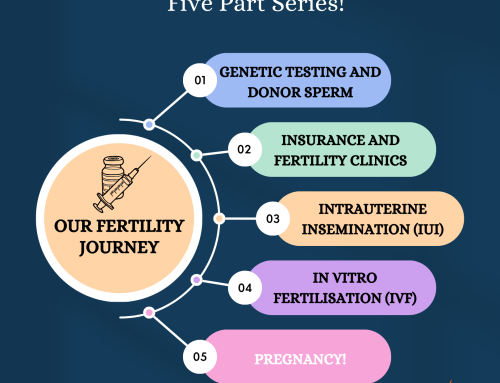
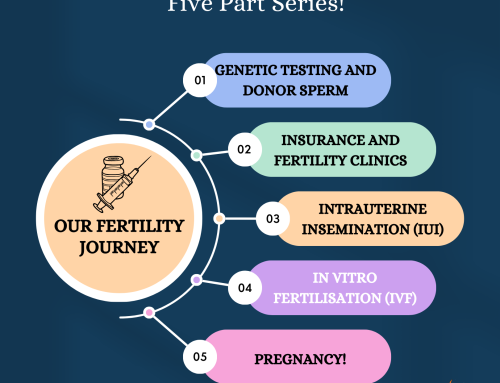

[…] experience my wife and I have been going through these past few years. Check out Parts 1 and 2 on Donor Sperm and Insurance and Fertility Clinics, […]
[…] the experience my wife and I have been going through these past few years. Check out Parts 1-3 on Donor Sperm, Insurance, and Fertility Clinics and Intrauterine Insemination (IUI), […]